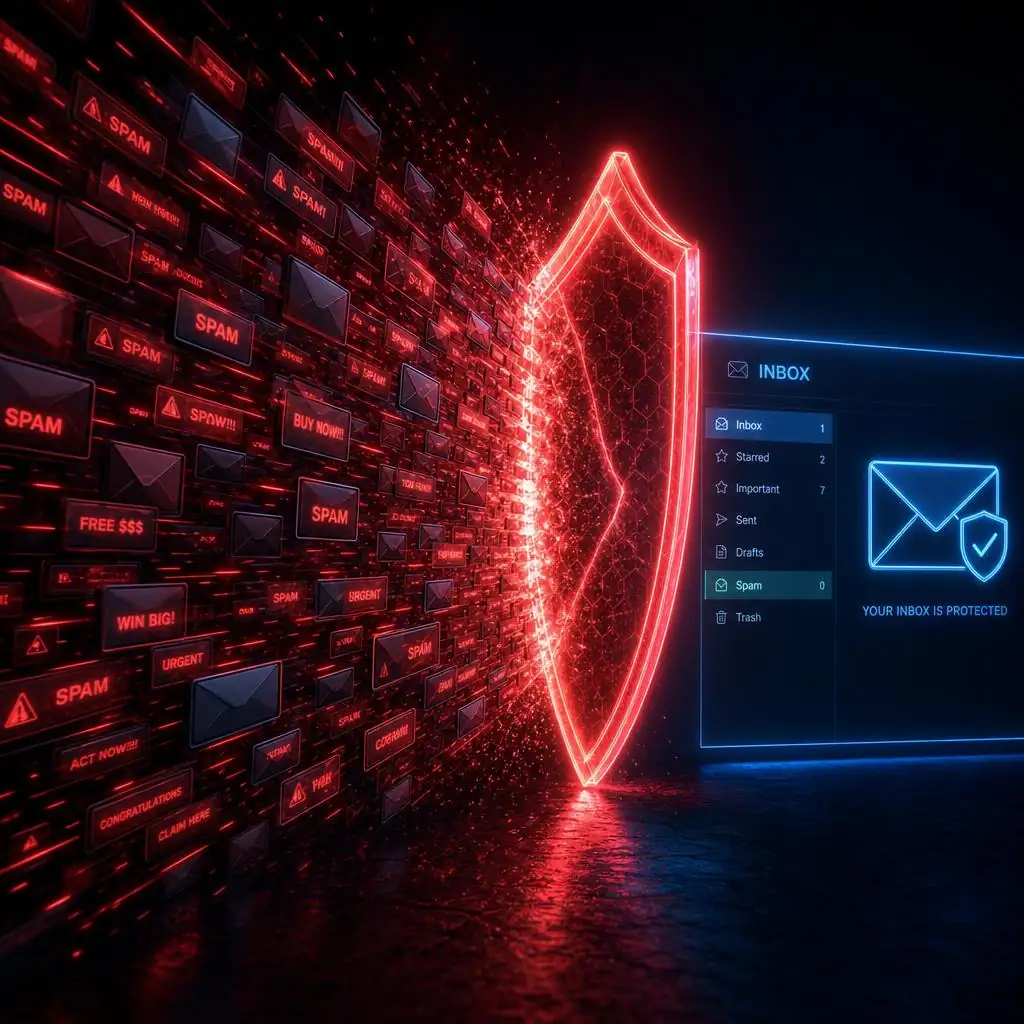
Spam filters are impressive — and still insufficient. Understanding how spam actually gets built, sent, and delivered explains why the best filter cannot replace upstream prevention.
Spam filters in 2026 are technically impressive. They analyse sending patterns, content, link reputation, sender authentication records, and historical complaint rates. They catch billions of spam messages per day. And they still fail often enough that spam in your inbox is a universal experience. Understanding why requires understanding the other side of the equation — how spam is actually built, sourced, and sent.
Where spammers get your address
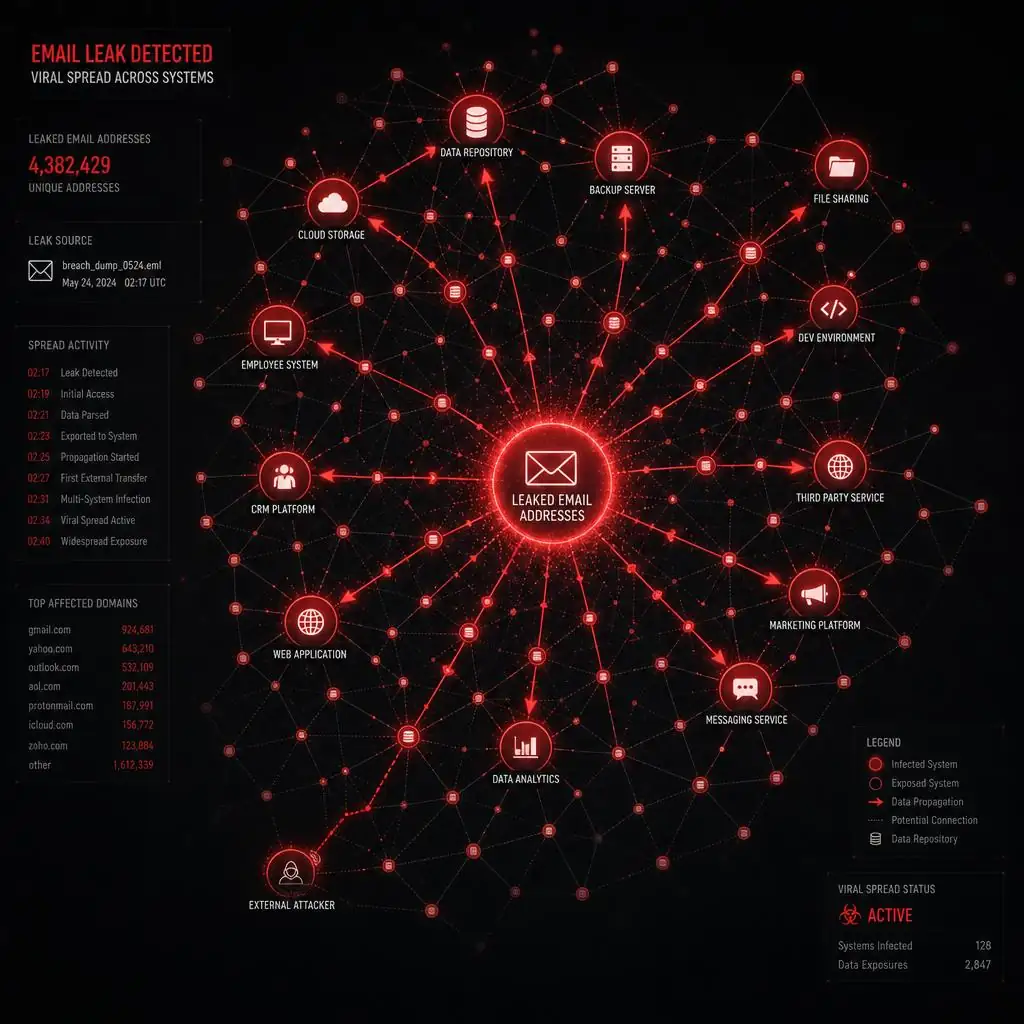
Your email address ends up on spam lists through a handful of well-worn paths. Data brokers aggregate addresses from public records, website registrations, and purchased datasets. Breached databases are sold on dark-web markets containing millions of verified active addresses. Website scrapers harvest any address posted publicly on the web. And legitimate businesses sell or transfer their subscriber lists when they are acquired or partner with affiliates — turning a consent-based relationship into a non-consensual one without your knowledge.
How spam gets through filters
Professional spam operations continually adapt their sending infrastructure and message patterns, so static filters can lag behind new campaigns. This is why users still need layered protection and should treat unexpected messages, links, and attachments as untrusted.
The sending side uses a handful of well-known techniques:
- Hijacked reputation. Mail sent from a hacked personal mailbox, or from a compromised account at a legitimate email marketing platform, inherits that sender's good standing.
- Snowshoe sending. Instead of one server sending a million messages, the campaign is spread thinly across hundreds of IP addresses and freshly registered domains, so no single one sends enough to stand out.
- Slow warm-up. New domains send a trickle of harmless-looking mail for days before the real campaign starts.
- Content tricks. Text hidden inside images, lookalike characters, random filler paragraphs, and links that pass through a trusted redirect or file-sharing service.
- Compromised devices. Botnets of infected home computers and routers send mail from ordinary residential connections.
How a spammer learns your address is live

A raw list is worth little; a verified one is worth much more. Verification happens in ways most people never notice. If the receiving server does not bounce the message, the address exists. If you open the email and remote images load, a tracking pixel records that someone is reading. If you click any link — including an "unsubscribe" link in mail from a sender you have never heard of — you confirm a real person is behind the address. Confirmed addresses are moved to better lists and receive more mail, not less.
This is why the advice differs by sender. Unsubscribe from companies you actually signed up with: reputable senders honour it, and large mailbox providers now require them to. For mail from a sender you do not recognise, do not click anything; mark it as spam.
SPF, DKIM and DMARC: what they check, and what they cannot
- SPF lets a domain publish which servers may send mail on its behalf.
- DKIM adds a cryptographic signature showing the message was sent by that domain and not altered on the way.
- DMARC tells receivers what to do when SPF and DKIM do not match the visible From address: nothing, quarantine, or reject.
Together they make it hard to forge mail from someone else's domain, which stops a lot of phishing that pretends to be your bank. They do not say whether mail is wanted. A spammer who registers a new domain can set up SPF, DKIM and DMARC correctly in an afternoon, and the spam will pass all three checks. Authentication proves who sent a message, not whether you asked for it.
Since February 2024, Gmail and Yahoo have required bulk senders to authenticate their mail, offer one-click unsubscribe and keep spam complaints low; Google's published guidance says to stay under a 0.3% complaint rate. That cleaned up careless legitimate senders. It does little against operators who discard a domain as soon as its reputation drops.
The numbers behind spam
Spam survives on arithmetic. Sending is close to free, so a campaign pays for itself even if only a handful of recipients per million respond. That also explains why spam often looks crude: obvious messages filter out sceptical readers early and leave the people most likely to follow through. Better filters lower the response rate, but they do not change the equation enough to end it.
Why filters are a trailing indicator
Filter systems learn from what reaches inboxes and gets marked as spam. They are, by design, reactive — they identify spam patterns after those patterns have delivered enough messages to train the model. That lag means newly registered sending infrastructure, new domains, and novel content patterns regularly evade filters for the first few days or weeks of a campaign.
What upstream prevention looks like
- Keep your main address off public pages. On a website, forum profile or classified ad, use a contact form or a separate address.
- Use a different address for low-trust signups: a temporary inbox for one-off confirmations, an alias for anything ongoing. When that address starts receiving junk, you know exactly who passed it on.
- Turn off automatic image loading in your mail app, or use the option to ask before showing external images. It removes the open signal.
- Untick the pre-ticked "send me offers" and "share with partners" boxes at signup. Much unwanted mail is technically consented to.
- Report spam; do not just delete it. Deleting teaches the filter nothing.
- If an address is already saturated, move your important accounts to a new one gradually and leave the old one as a spam sink.
A temporary inbox is only one of those six steps, and it has limits of its own. It does not make you anonymous, it cannot send mail, and it is the wrong choice for any account you need to recover later.
Frequently Asked Questions
Does marking emails as spam actually help?
Yes, for your own filter — it trains your provider's model to catch similar messages. Your spam reports also contribute to shared reputation signals across the email ecosystem.
What is the most spam-resistant email provider?
All major providers have competitive spam filters. The provider matters less than the habits around what you give your address to.
Is it safe to click unsubscribe in a spam email?
It depends on the sender. For a company you recognise and signed up with, yes — use it. For an unknown sender, do not click anything: a click confirms your address is active. Mark the message as spam instead.
Why do I get spam at an address I have never used anywhere?
Spammers also generate addresses by combining common names and words with popular domains, then keep the ones that do not bounce. Short or common usernames are found this way without ever being leaked.
Can spam filters ever be 100% effective?
No. Spam is an adversarial problem — operators actively adapt to filter improvements. A 99.9% accurate filter still delivers thousands of spam messages when the volume of email sent is in the billions per day.
Sources & references
#how spam works#email spam explained#spam filter limitations#email security 2026#stop spam email